

The most dangerous approach to manage your P&L involves disregarding price elasticity data.
Your pricing strategy becomes dangerous when you use gut feelings and cost-plus methods without considering elasticity data. The GCC market requires immediate price elasticity analysis because demand patterns shift based on policy changes and competitive dynamics which leads to unexpected revenue drops and decreased profit margins and incorrect planning data. The solution requires immediate action rather than academic research. The solution requires measurable and practical implementation which begins immediately this week.
The concept of elasticity requires one page to understand and finance professionals in finance need to understand its significance.
The Price Elasticity of Demand (PED) measures how customers change their purchasing quantity when you modify product prices.
The calculation for PED equals the percentage change in quantity demanded divided by the percentage change in price.
The price elasticity of demand exceeds 1 which means small price adjustments lead to significant changes in product volume.
The price elasticity of demand remains below 1 which indicates that customers show minimal response to price changes.
The analysis of cross-price elasticity (CPE) reveals how your market demand shifts when competitors modify their pricing structure. The analysis of PED/CPE enables you to transform price choices into specific P&L projections which replace uncertain assumptions with quantifiable results. External: HBR — A Refresher on Price Elasticity. HBR — A Refresher on Price Elasticity
The following four risk assessment methods will indicate problems when elasticity analysis is omitted from your strategy
1) Revenue volatility
The demand for elastic SKUs will decrease twice as quickly when prices increase and the resulting volume loss will exceed initial projections. The failure to adjust prices on inelastic SKUs results in a self-imposed revenue limitation. The top line becomes unpredictable when you fail to consider elasticity which damages your ability to make accurate forecasts. Simon-Kucher — Master Price Elasticity
2) Margin erosion
The two main discount-related problems occur when elastic products receive excessive discounts without proper controls and when inelastic products receive insufficient pricing because of cost-plus methods. The combination of these two factors leads to reduced contribution margins at times when businesses need stronger unit economics because of rising input costs and foreign exchange volatility. A systematic approach to elasticity helps businesses set specific discount ranges for elastic products and enables them to raise prices on products with stable demand. Simon-Kucher
3) Forecast and inventory risk
The use of straight demand lines in planning models results in their breakdown. The demand response to price changes differs between market segments and distribution channels and time periods so incorrect elasticity analysis leads to stockouts during promotions and excess inventory after price increases. The first impact of this situation reaches finance through increased working capital requirements and longer cash conversion periods and reduced covenant compliance space.
4) Competitive exposure (substitution risk)
A small price reduction from competitors through CPE will lead to an immediate shift in customer traffic. The risk level increases when customers can easily compare prices through digital channels. The absence of CPE data in your dashboard leads to delayed reactions which result in spending months recovering lost volume through untargeted discount promotions.
Elasticity analysis serves as more than a theoretical concept in GCC markets
The Gulf region has experienced multiple price reform initiatives across its energy sector and utility and transportation industries. Research indicates Saudi Arabian energy demand exhibits short-term price inelastic behavior according to numerous studies. The absence of free pricing does not exist but value-based price increases tend to perform better than fear-based discounts and forecasting models need to account for minimal short-term price sensitivity. KAPSARC — Tapping into Saudi Arabia’s energy demand
Consumer behavior and market competition lead to increasing elasticities when policy changes occur because people learn to adapt and new options become available. Elasticity should be viewed as a dynamic factor which changes over time instead of remaining static. The IMF demonstrates through GCC energy pricing analysis that policy reforms create new market incentives which produce changes in customer purchasing behavior that affects both revenue streams and operational costs. IMF
A simple business scenario demonstrates a common situation
The Riyadh consumer electronics distributor wanted to implement a 6% price increase for their products to offset rising freight costs and currency fluctuations. The sales team recommended implementing a universal promotional offer. The team performed a rapid elasticity assessment.
Premium accessories demonstrated inelastic demand patterns because their PED values ranged between 0.3 and 0.5.
The entry-level peripherals demonstrated elastic behavior because their PED values ranged between 1.4 and 1.7.
The CPE analysis revealed two products had high substitution risk because marketplace sellers operated with aggressive pricing strategies.
Premium products received a +5% price increase because of their low PED while elastic products maintained their current prices and entry-level items received a limited bundle protection. The 90-day results showed revenue growth of 3.2% and gross margin expansion of 140 basis points while inventory turns remained constant. The pricing strategy based on elasticity knowledge avoided channel conflicts and prevented any need for emergency promotional activities.
A company should implement elasticity operationalization methods that prevent the transformation into a data science laboratory.
1) Measure what matters
The company should conduct controlled price tests that increase or -5% to -10% on two SKUs each month to track demand changes.
The Gabor-Granger and Van Westendorp survey tools serve as initial market signals for new offers before market validation.
The company should calculate PED values separately for each SKU family and channel segment and customer group. The data shows that no single elasticity curve works for all products.
2) Wire elasticity into planning
Your driver-based model requires PED integration to automatically calculate volume and revenue and contribution changes when prices adjust.
The inventory management system should use elasticity data to determine purchase quantities because elastic products need promotional stock reserves but inelastic products can operate with reduced stock levels.
The cash flow simulation helps organizations determine Revenue-at-Risk and Margin-at-Risk amounts before obtaining price approval.
3) Guardrails and governance
The implementation of price fences for elastic SKUs through bundle promotions and off-peak discounts and loyalty programs enables volume growth without requiring general price reductions.
All list price adjustments exceeding 5% need documented elasticity estimates and substitution analysis before approval.
The category team performs monthly elasticity assessments for all categories but conducts detailed evaluations of their top 20 SKUs every quarter.
4) Competitive and cross-elasticity
Create a substitution map for your leading categories to determine how rivals compare based on their CPE values and feature compatibility and distribution channels.
Your bundle adjustment strategy will activate when a high-CPE competitor lowers their prices by 5% instead of performing price matching that would harm your margins.
Your team needs to monitor these specific KPIs throughout each week.
The PED value should be tracked for each SKU segment and its corresponding segment.
The method for measuring price elasticity involves analyzing historical price and quantity data through regression analysis followed by controlled test validation.
The top substitute items need to have their cross-price elasticity (CPE) measured.
The model requires competitor price index inclusion for measuring CPE while monitoring their price changes to detect share movements.
The RaR calculation for price changes equals the sum of absolute quantity changes multiplied by product prices from elastic SKUs.
The calculation of MaR requires the summation of GM changes resulting from price adjustments that use PED values.
The price-sensitive forecast error rate equals the absolute difference between actual and forecasted values divided by the forecast amount with price change indicators.
The elasticity-adjusted Promo ROI calculation uses the formula (Incremental GM – Promo cost) / Promo cost to determine the return on investment while accounting for product cannibalization.
A pricing strategy exists for immediate implementation during this week.
The first step involves selecting five products based on sales data analysis and professional judgment to determine their elastic or inelastic behavior.
The first A/B price test should be conducted with a 5% price variation on an elastic product candidate while controlling exposure to measure both positive and negative effects.
The analysis demonstrates how a 5% list price change affects inelastic families through a 0.3-0.6 PED model which shows resulting GM effects.
Create two price fences which combine bundle offers with loyalty tiers to protect volume while preventing universal price reductions for elastic products.
Create a one-slide dashboard that displays PED and CPE values and RaR/MaR metrics for the top-10 SKUs which should be updated monthly.
Six-Week Outcome: Commercial Teams Maintain Active Elasticity Databases for Each SKU Family
The financial department uses PED and CPE data to enhance their driver-based forecasting system and cash management planning.
The category teams develop price adjustment plans which include risk assessments and substitution strategies for their proposals.
The combination of price fences and discount reduction and stable unit margin levels occurs when competitors make price changes.
The bottom line
The practice of disregarding price elasticity data represents a dangerous approach rather than a cautious one. Your pricing decisions https://3msbusiness.cloud/pricing-architecture/ will become incorrect and you will pursue your original business plan during the brief period. The long-term effect of ignoring price elasticity will make customers wait for discounts while competitors select your unresponsive product segments for profit.
The first step to begin your pricing journey starts with a Pricing & Risk Diagnostic appointment https://3msbusiness.cloud/the-price-waterfall-where-margin-quietly-disappears/.
Our team will assess PED/CPE for your leading categories and integrate them into your forecasting system to create a 90-day pricing strategy that decreases price volatility and boosts profitability within a four-week period.
Accessories for Office from Amazon:
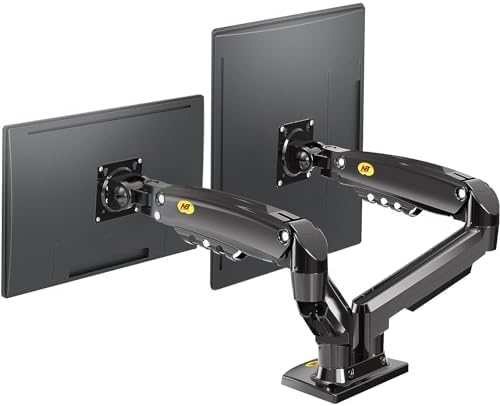
- TWO MONITORS AT ONCE: Fits most 17”- 27” Monitors with the load from 4.4 -19.8 lbs (2-9KG) for each monitor, VESA comp…
- While the whole VESA Plate of this product is 120*120mm,Pls pay special attention to the size of VESA Plate if your moni…
- FULLY ADJUSTABLE RANGE: Your two screens will have 360° rotation, tilt angle +85° to -30°, swivel ±90° Upright up to 10″…

- hi-res certified music: hear every detail of your favorite songs thanks to q30’s 40mm drivers. the highly-flexible silk …
- advanced noise cancellation technology: maintain your focus with q30’s hybrid active noise cancellation. dual noise-dete…
- ultimate noise cancellation experience: customize q30’s noise cancellation with 3 modes—transport minimizes airplane eng…

- 【40-Hour Battery Life】Once fully charged, the earbuds will sustain up to 9 hours of listening, and when charged multiple…
- 【Compact and Comfortable to Grip】Each earbud weighs as little as 3.8 g, and is designed to create a snug fit, thanks to …
- 【3 Hours of Music Playback on a 10-Minute Charge】Charge the earbuds for 10 minutes before your commutes, and listen for …