

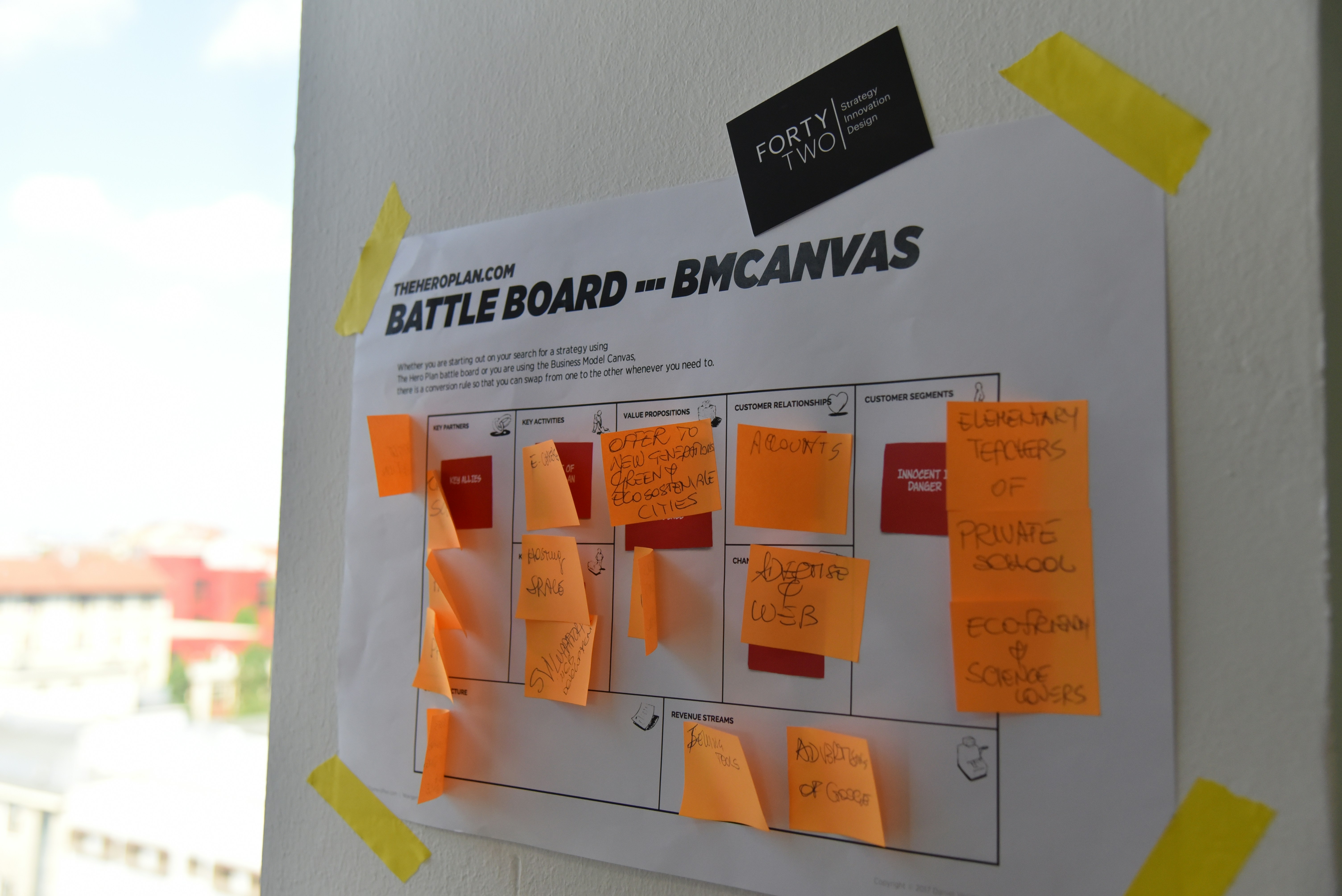
Understanding the Innovation Trap
Businesses face an innovation trap by putting large investments into untested new ideas. Businesses need innovation as a way to maintain competitiveness while adjusting to changing market conditions and generate growth opportunities. Companies that dedicate excessive resources to unproven concepts face two major risks including financial loss and loss of strategic direction.
Organizations need to understand that creativity alone does not lead to successful innovation. A proper evaluation system along with testing procedures and execution methods serves as the essential foundation. The entire innovation process consists of three distinct phases which include idea generation followed by development and then execution.
The first stage of innovation begins with generating ideas while facing associated risks during this creative period.
The initial phase of idea generation typically brings excitement to teams. Team members generate ideas without restrictions while believing the number of possible solutions extends into infinity. During this phase creativity reaches its peak since there are minimal boundaries in place. The main objective of this phase is to create multiple alternative solutions which will create innovative thinking and fresh business opportunities.
The main difficulty emerges when organizations do not properly screen and choose which ideas to pursue. Weaker or impractical concepts receive equal attention from leaders as promising ones do when there is no robust evaluation system in place. Leaders encounter information overload which makes it challenging to find the most valuable ideas. When this happens, time and resources may be wasted on ideas with little chance of success.
How to Improve This Stage:
A scoring system should be implemented to evaluate ideas through market potential assessments along with cost analysis and feasibility checks.
The inclusion of diverse teams from multiple departments during the early stages helps evaluate each concept through different perspectives.
A market validation check should be performed before advancing any idea.
Stage Two: Development Risks — Where Costs Climb
When an idea advances to the development phase the level of risk increases significantly. The project receives budget distribution and teams dedicate their resources while beginning construction. Risks start to increase in cost at this point.
Development expenses increase at companies that lack full understanding of customer requirements as well as their operational limitations. A product will likely fail completely when market research falls short. Internal teams often continue project development after receiving warning signals because they feel the costs have become too significant to abandon the project.
Many wearable technology startups rushed their products to market before confirming whether consumers actually needed the features they were developing. Because of this the company ended up with unmarketable inventory that failed to sell.
How to Reduce Risk:
The development process should include multiple testing phases which should happen repeatedly instead of being limited to the project’s conclusion.
The process should involve real customers from the beginning to verify their needs match the concepts being developed.
Review internal capabilities before scaling development.
Stage Three: Execution Challenges — The Final Hurdle
The critical phase of execution represents the point of determination. Great ideas can fail during this phase because of rushed development or inadequate testing. Some businesses choose to bypass final testing because they want to meet their launch deadlines although they believe they can make adjustments after release. Customers tend to hold lasting negative feelings about their first experience with a product.
Inadequate preparation for launch results in damage to brand trust along with decreased future sales and complete loss of development investments spanning years. A product launch failure becomes more costly to repair since marketing expenses along with distribution costs and production expenses have already started.
Avoiding Execution Pitfalls:
The company should conduct controlled pilot tests as a prerequisite to full-scale product launches.
The implementation of key performance indicators at an early stage enables the identification of problems.
The sales and support teams should receive pre-launch training to achieve readiness for the day of product launch.
Common Causes of Innovation Failure
The failure of innovation initiatives generally stems from multiple errors rather than a single fault. The combination of market problems together with organizational challenges and strategic flaws leads to this outcome.
Lack of Market Research
Solid market research proves essential for preventing well-funded projects from failing. When products lack solutions for genuine customer problems they fail to find market success. Internal staff opinions often replace data which results in companies building incorrect confidence levels.
Multiple high-profile smartphone models became unsuccessful because they included irrelevant features that customers did not need and delivered excessive features which customers did not want.
Poor Adaptation to Change
Markets evolve quickly. Technology shifts, competitors innovate, and customer expectations change. Organizations that can’t adapt in time risk making their products irrelevant before they even launch.
Kodak and Blockbuster are classic examples. Kodak pioneered digital photography but was slow to shift its business model away from film. Blockbuster had the chance to buy Netflix but underestimated streaming’s potential.
Internal Resistance and Leadership Gaps
Innovation can be uncomfortable. Employees may resist new projects if they fear job losses or major workflow changes. Leadership plays a key role in overcoming this resistance. If leaders fail to communicate the value and vision behind innovation, teams may lose motivation.
Siloed departments also create barriers. When information is trapped in specific teams, ideas can’t benefit from the full organization’s expertise.
Strategies to Avoid the Innovation Trap
The prevention of innovation trap demands both discipline and the ability to make difficult choices. A proper blend between creativity along with validation procedures and execution planning methods will help organizations achieve their goals.
- Conduct Thorough Market Research
The process of comprehensive market research helps to establish that new products address genuine problems in the market. It also highlights potential competitors and helps define the right target audience. The assessment process needs this information for guiding decisions before product development starts.
- Use Continuous Feedback
The collection of feedback needs to happen throughout all stages from initial idea generation through to launch. Engage customers, employees, and industry experts. Continuous product development through customer input reduces major errors that lead to high costs.
- Test with Prototypes
Teams can evaluate the core functions of new products through the implementation of Minimum viable products (MVPs) before dedicating extensive resources. The method allows for the detection of technical issues and customer preference identification at the beginning of the development process.
- Make Data-Driven Decisions
Using analytical data instead of personal intuition as a decision-making tool decreases the likelihood of risk. Performance metrics should be tracked continuously for strategy adjustments as market conditions shift. Agile methods allow for faster course corrections.
- Build a Culture of Safe Experimentation
Organizations that create protected experimental conditions allow their teams to explore new ideas without exposing their business to significant dangers. When teams view failure as an educational experience they gain both innovation capabilities and stronger resilience.
Case Studies: Success After Failure
Apple
Apple’s Apple III failed because of design flaws alongside overheating problems. The company moved its resources from personal computers to focus on developing the Macintosh after the Apple III failure. Through this decision Apple transformed itself while setting new standards for the entire technology industry.
Netflix
The transition of Netflix from DVD rentals to streaming services proved difficult for the company. The service gained few new users at first while facing intense market competition. Netflix applied data from viewing records together with feedback to enhance its platform while building a dominant streaming industry across the world.
Turning Failure into a Competitive Advantage
The natural occurrence of failure during innovation does not necessarily mean organizational destruction. Organizations that achieve success view their errors as chances to develop better solutions. Organizations analyze their mistakes to develop new strategies which results in their growth into stronger organizations.
Organizations that prevent the innovation trap possess certain fundamental characteristics.
• They balance bold ideas with disciplined evaluation.
• They act quickly when markets change.
• They create cultures where feedback flows freely.
These elements when in place make innovation sustainable while minimizing risks.
Final Thought
The innovation trap becomes avoidable through proper mindset approaches combined with appropriate processes. Businesses that unite innovative thinking with thorough assessment capabilities and market adaptability and learning from their failures will not only survive but succeed in competitive markets.

- PROTECTS VALUABLES: 1.8-cubic-foot home safe for safeguarding important documents, jewelry, cash, devices, and other pre…
- RELIABLE SAFETY: This safe box features a programmable electronic keypad for secure, easy operation, along with a back-u…
- DURABLE CONSTRUCTION: This mini safe is built with heavy-duty steel, including an 8-gauge steel door and 14-gauge steel …

- 14 L security safe security safe with electronic lock and 3 operation indicator lights; powered by (4) AA batteries (not…
- Includes 2 emergency override keys to protect against forgotten passcodes or dead batteries; keep keys in a well-hidden,…
- Strong steel construction with carpeted floor to protect against scratches and damage; pry-resistant concealed hinges; a…

- Enhanced Night Vision with Smart IR- With Smart IR, the intensity of the infrared LEDs automatically adjusts to prevent …
- Two Way Audio and Accurate Motion Detection- You can talk with your families easily with Two-way audio. The camera will …
- 1080P HD and 360° panorama View- Designed as a pan-tilt Wi-Fi camera with panoramic viewing angles, delivering a 360° ho…