

Your current innovation efforts produce features which customers refuse to pay for.
Your current pricing strategy would result in zero customer purchases if you launched your new product today. The market education approach you use to predict sales indicates you might be overlooking the fundamental problem of customer willingness to pay. The failure to understand customer willingness to pay leads to the stagnation of innovative products. Innovation leads to profitable growth when you understand customer willingness to pay but it results in publicity without financial gains when you ignore it. This guide provides senior leaders and founders and CEOs with methods to identify WTP risks early and conduct fast WTP tests to develop an innovation system that delivers valuable products customers will fund. (WTP = the maximum a customer will pay for a specific offer.) Harvard Business School Online
Fast takeaways
The price of a product determines its final form. Your product lacks value when customers refuse to make payments.
The job-to-be-done framework provides better insights than traditional demographic analysis. Your design process should focus on the tasks customers need your help with. Christensen Institute, Harvard Business School
The measurement of WTP should be your priority. The correct methods for determining WTP include Van Westendorp and Gabor-Granger and conjoint analysis instead of depending on feelings. Conjointly, Attest
Segment your customers based on their willingness to pay. Customers should determine their payment level through their willingness to pay for specific services. Harvard Business Review
The process of adjusting prices should be ongoing. Value-based pricing outperforms cost-plus pricing and competitor price duplication according to MIT Sloan Management Review.
Great ideas perish when organizations fail to consider customer willingness to pay.
The failure of innovation occurs when the offer fails to match the price and target market segment. Teams create advanced features for budget customers but fail to allocate sufficient resources for premium customers who would pay more for essential outcomes. The outcome leads to price reductions and extended sales periods and costly educational programs that consume financial resources. The measurement of WTP exists as a quantifiable value which changes over time. Your price-value story needs to adapt to market changes because they occur naturally. Retailers and platforms use price testing and segmentation and personalization to determine WTP because this approach delivers results. Harvard Business Review, MIT Sloan Management Review
The following indicators signal that you are disregarding customer willingness to pay:
- Demo love, deal apathy. People praise the product yet push for deep discounts.
- CAC creeping up. The price-value alignment is poor so you must purchase customers.
- Discount ladder dependence. The AE playbooks depend on “save the deal” discount strategies.
- Tier leakage. The majority of customers select the entry-level package yet they use advanced features that cost more.
- Roadmap bloat. The addition of new features serves to validate pricing rather than delivering a single essential solution.
- Vanity metrics. The number of trials and visits appears positive but revenue and gross margin performance remains unsatisfactory.
Three yellow indicators should prompt you to stop feature deployment and conduct pricing research during this week. Systematic pricing methods outperform pricing intuition because they are not optional. MIT Sloan Management Review
A fast and trustworthy method exists to evaluate customer willingness to pay.
1) Begin your analysis with Jobs to Be Done (JTBD).
People use solutions to advance their progress in three main areas which include functional needs and social and emotional requirements. Define the job with precision before identifying essential customer outcomes that lead to payment rewards. The application of JTBD leads to better success rates because you create solutions that match what customers will pay for. Christensen Institute
2) Select research tools that match your current business development level.
The Van Westendorp method provides fast pricing insights through four questions that help determine acceptable price ranges. The method provides initial market direction. Attest
Gabor-Granger directly assesses customer demand at specific price points to create demand curve estimates. Conjointly
The conjoint analysis method allows users to evaluate how customers weigh different features against prices to determine attribute values for creating product packages. Conjointly
3) Validate in the wild.
The testing process requires actual promotional offers that include time-limited price deals and product bundles and restricted access options. Customers should determine their willingness to pay through self-segmentation between good-better-best options. Harvard Business Review
4) Price to value, not cost.
The cost-plus method provides simplicity yet produces incorrect results. The practice of matching prices to competitors represents a lack of effort. Value-based pricing establishes prices based on how customers perceive value and the expenses they must replace. MIT Sloan Management Review
Internal link: The article Understanding Customer Truth: Leveraging Jobs-to-be-Done to Identify Demand Before Building.
https://3msbusiness.cloud/customer-truth-jobs-to-be-done/
Organizations need to develop an innovation system which honors customer willingness to pay.
The product development process should include price as a fundamental element.
The price-setting process for products should be shared between Product Managers and financial experts. The epic documentation requires three essential elements which include target customer segments and their jobs and their willingness-to-pay ranges supported by survey data or testing results or market research analogs.
Institutionalize learning.
The innovation process includes three-month sprints which require teams to develop one testable value enhancement and one packaging modification and one pricing experiment for each cycle.
Stage-gate funding.
The funding process should follow a step-by-step progression from Discover to Validate to Build to Scale with WTP evidence requirements that include achieving 20% conversion at target prices. The system prevents organizations from wasting resources on failed projects. MIT Sloan Management Review
Cross-functional rituals.
The weekly 45-minute review includes JTBD insights and price tests and win/loss notes and a basic dashboard that shows win rate and ARPU and gross margin and CAC/payback metrics.
Ethical personalization.
The practice of offering customized bundles and packages instead of hidden pricing structures remains acceptable when your industry standards and regulatory requirements permit it. (Personalized pricing exists; weigh trust carefully.) Harvard Business Review
B2B SaaS operates as a mini-case study.
The workflow SaaS platform encountered major discounting problems while its payback period reached nine months. The company shifted its focus from adding AI features to finding price-value alignment for their products. The team conducted Van Westendorp surveys with 300 participants followed by Gabor-Granger and conjoint analysis with two different ICP groups. Operations leaders placed greater importance on uptime and audit trail functionality than dashboard features and they would pay 25-35% more for guaranteed service level agreements. The team created new pricing tiers based on reliability features and restricted advanced analytics access while increasing list prices by 12%. The company achieved a 9-point increase in win rate and reduced average discounts from 18% to 8% while shortening CAC payback to 6.5 months and maintaining the same engineering budget for improved gross margin.
Consumer services operate as the second mini-case study.
The wellness center operated under a single pricing system for all customers. The number of trials increased yet the revenue numbers remained unchanged. The company discovered through JTBD interviews that customers performed two main activities: seeking expert coaching before events and wanting affordable maintenance services. The company introduced premium coaching services with human consultation guarantees and basic self-service options for customers. The company used price fences to create bundles which included priority booking and exclusive classes. Customers chose their preferred service level based on their willingness to pay while the low-tier matched their budget needs and premium services delivered the outcomes enthusiasts sought. The revenue per member increased by 17% through strategic pricing without requiring forceful upselling methods. The key takeaway demonstrates that WTP should determine product packaging instead of forcing all customers to use the same pricing structure.
New technologies should be implemented while maintaining focus on the core mission
AI systems can help businesses detect and answer WTP signals more efficiently when they receive appropriate input questions.
The combination of GA4 and Search Console and ad platform data enables businesses to track user queries and segment identification and purchase intention detection.
The testing of offers includes changing bundle names and value statements and price restrictions to measure conversion rates and ARPU across different customer groups.
The system identifies accounts that show price-sensitive behavior through downgrade exploration and usage reduction so it can test retention offers without universal price reductions.
The system tracks competitor product releases and customer feedback to modify WTP assumptions during monthly assessments. The price of a product should be determined by customer value rather than production costs. MIT Sloan Management Review
The following 90-day action plan contains specific steps which you should implement immediately
- Write the job. Each ICP requires a single statement which describes the situation and the required solution and the desired outcome.
- Define outcomes & metrics. What proves the job is done? (Time saved, uptime, ROI.)
- Map price hypotheses. The team should create WTP range estimates for each ICP segment and each pricing level.
- Run research. The research sequence begins with Van Westendorp surveys followed by Gabor-Granger or conjoint analysis for more detailed results. Attest, Conjointly
- Repackage. The team should organize good-better-best options with distinct boundaries and clear explanations of value. Harvard Business Review
- Validate live. The system requires price tests to run with clean cohorts and a predetermined kill date.
- Install guardrails. The system includes three essential features which include gross-margin floors and CAC/payback caps and discount authorization limits. MIT Sloan Management Review
- Codify the ritual. The company conducts a weekly price-value assessment while creating a monthly document to determine tier and price adjustments and roadmap development.
The following examples show how innovators successfully matched their offerings to customer willingness to pay.
Airlines use their cabin tiers to offer economy and premium and business classes which provide different job experiences for passengers who value them at different levels. (Self-segmentation by value.) Harvard Business Review
The software suite offers modular pricing tiers which block premium features from lower-paying users but enable budget-conscious customers to access entry-level options. The conjoint method determines which features should be placed in each tier. Conjointly
Retailers use A/B testing and personalized offers to determine micro-segment WTP while maintaining customer trust through careful application of these methods. Harvard Business Review
TL;DR
The failure to consider customer willingness to pay creates an innovation barrier. Your innovation process begins with JTBD to create solutions that deliver meaningful value to customers. The measurement of WTP requires Van Westendorp or Gabor-Granger or conjoint analysis followed by tier packaging that enables customers to choose based on value. The pricing strategy should focus on delivering value to customers rather than using cost data or competitor prices and must undergo live testing. The system requires stage-gates along with margin floors and CAC/payback caps for proper governance. The combination of AI systems with analytics tools enables organizations to detect market trends and make swift adjustments. Your innovation engine will operate independently when you implement this approach.
CTA
Identify the point where your price-value narrative fails between tier levels and segment definitions and message delivery and select a WTP test to resolve this issue during the current month.
Hashtags:
#InnovationStrategy #WillingnessToPay #JobsToBeDone #PricingStrategy #ProductLeadership #B2BGrowth #GCCBusiness
Office materials from Amazon:
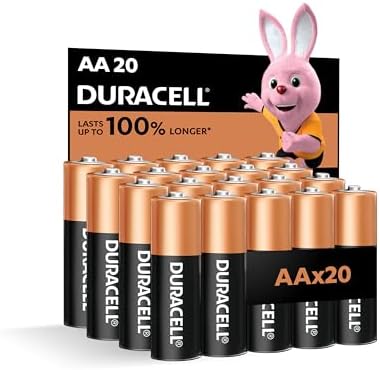
- Duracell AA Batteries: The Duracell CopperTop AAA alkaline battery is designed for use in household items like remotes, …
- Duracell guarantees these batteries against defects in material and workmanship. Should any device be damaged due to a b…
- Long Lasting Power: Duracell alkaline batteries are designed and developed for long lasting performance.
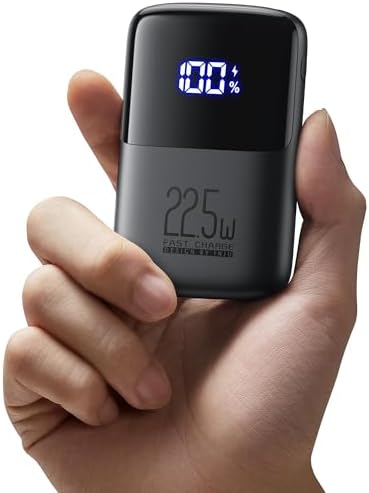
- [From INIU – the SAFE Fast Chage Pro] Experience the safest charging with over 38 million global users. At INIU, we use …
- [22.5W Speedy Charge] INIU 22.5W power bank combines the most advanced PD 3.0 and QC 4+ fast charging technologies—it in…
- [Compact as A Card] This incredibly compact body is 17% thinner, 23% smaller, and 38% lighter than its kind. You can eas…
![UGREEN Revodok USB C Hub with 100W PD Charging [Braided Cable], T...](https://m.media-amazon.com/images/I/41DJO-tB2pL._AC_.jpg)
- 【5-in-1 USB C Hub 】1*4K HDMI Port, 1*PD 100W Charging Port, 1*USB 3.0 Ports, 2*USB 3.0 Ports. All ports can work simulta…
- 【100W USB-C PD Adapter】:This Macbook USB C Hub with upgraded smart chip, USB C charging port can deliver up to 100W of p…
- 【4K@30Hz High-Resolution HDMI Adapter】: Simply connect with the Type c to Hdmi port and you can project UHD 4K@30Hz or F…